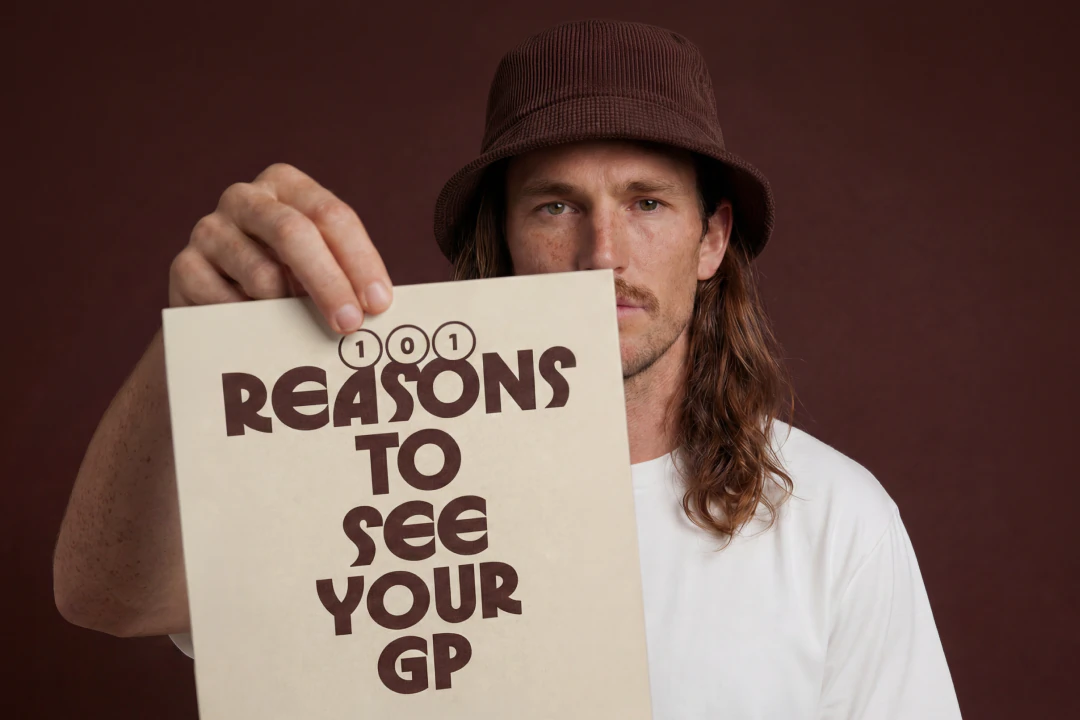
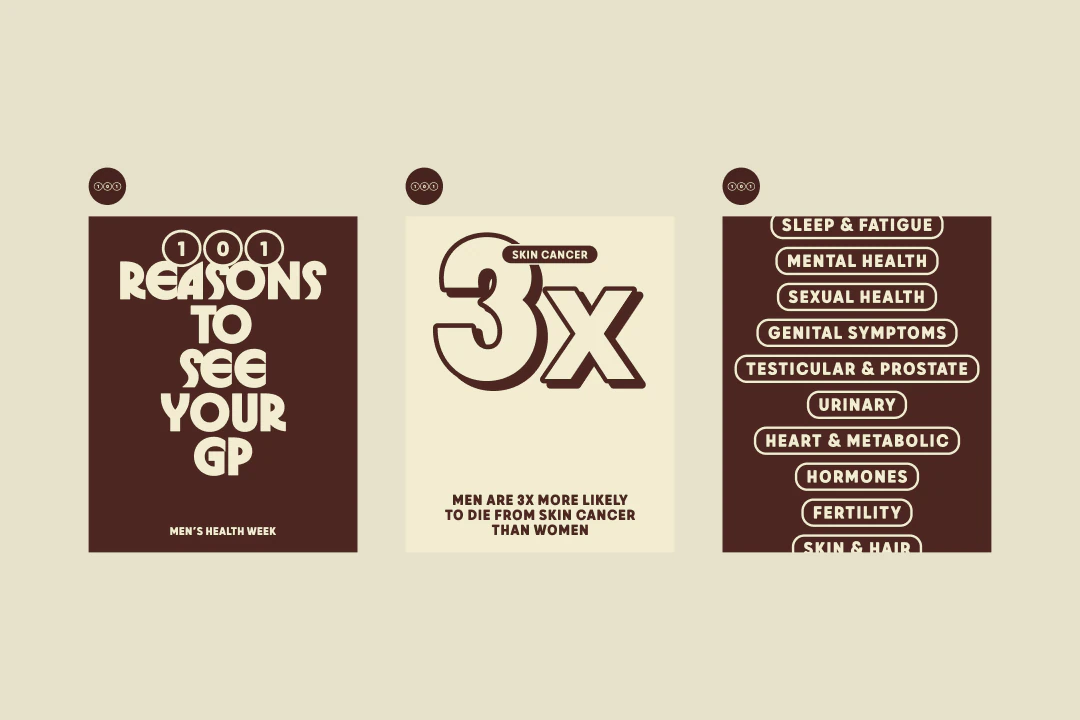
There are 101 reasons to see your GP. You probably already know yours. Men’s Health Week 2026 is your reminder to use it. Two in three Australian men wait too long when something changes.
We’re not here to lecture you about that. We’re just here to make going feel less like a big deal, because it isn’t. Book it!
Topics
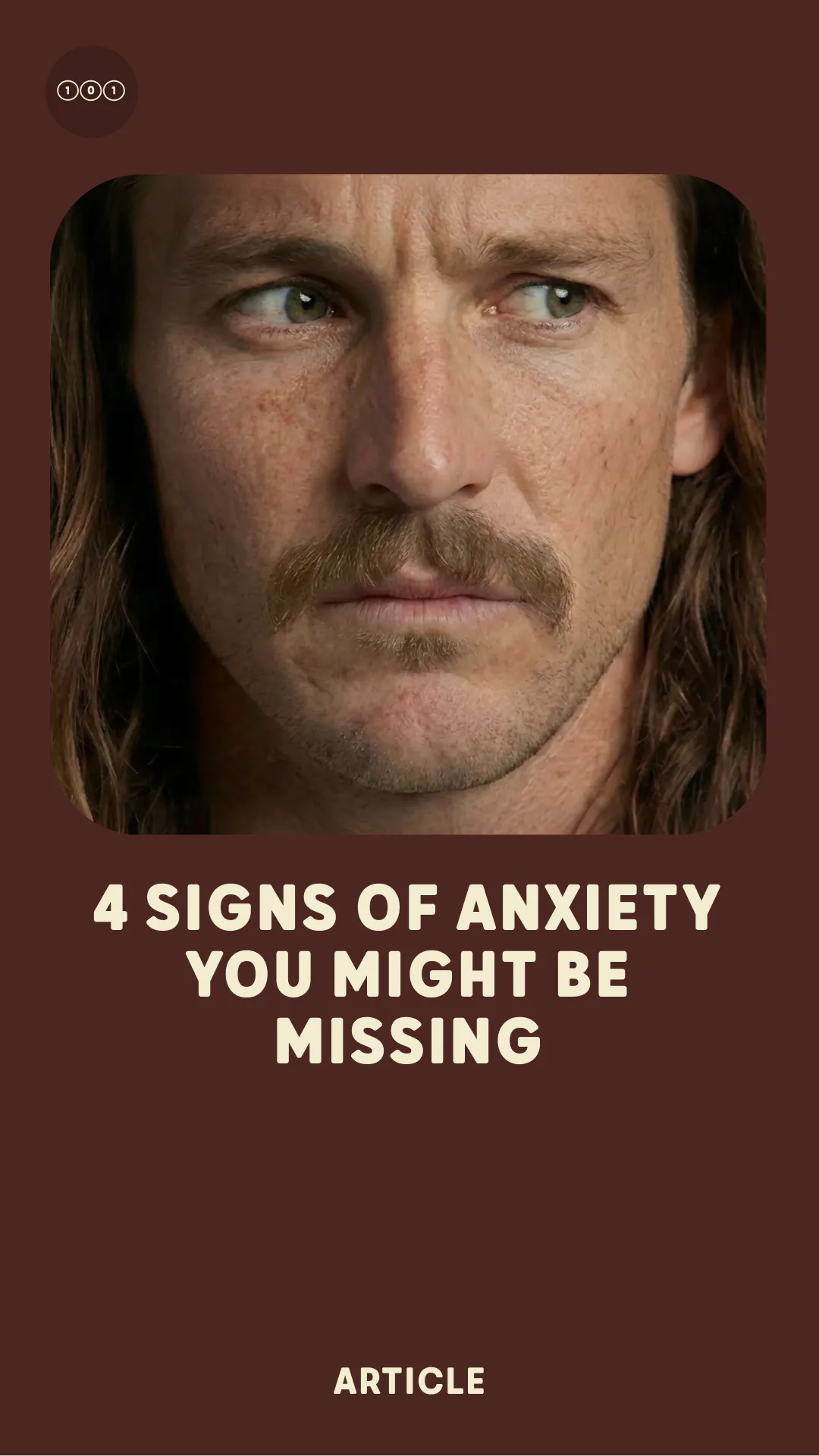
Anxiety that won't switch off.
When your brain’s stuck in overdrive most nights and you can’t seem to switch off, even when you’re exhausted, that’s not just you being a “worrier”. It can be anxiety, and it’s something you can actually get help with.
You're irritable with everyone you actually like.
Getting short with people you care about and not really recognising yourself in it, especially over small stuff, is often stress building up, not you just being an arsehole. It’s worth figuring out what’s behind it.
You've left the job but the job didn't leave you.
Even if the job or situation is over, that on-edge, jumpy feeling doesn’t always go with it, and neither does the constant scanning or bad sleep. That can be PTSD, and it can hang around longer than people expect.
You haven't hit up the group chat in ages.
For some guys, it shows up as going quiet, leaving messages, skipping things they used to enjoy or just not feeling much at all, even around mates. That can be depression. It doesn’t always look like sadness.
Staying in bed feels easier than facing the day.
When getting out of bed has felt like a real effort most days for a while, and everything feels heavier than it should, that’s not something to just push through. That’s depression too, even if it doesn’t look how you thought it would.
Flat since the birth and waiting for it to lift.
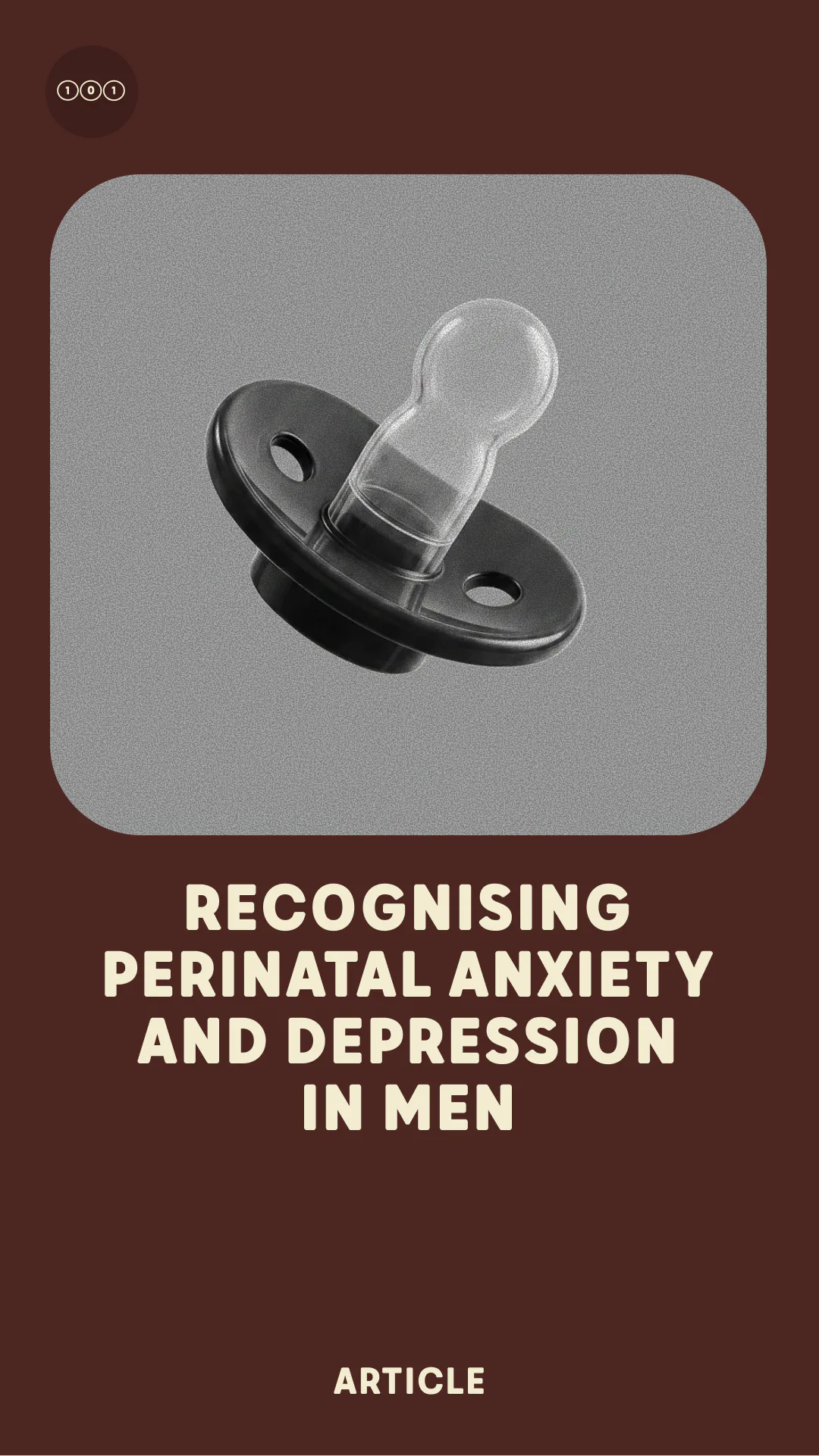
About one in ten dads experience postnatal anxiety and/or depression, but it doesn’t get talked about much. If things have felt flat, heavy or disconnected since having a baby, that can be postnatal depression.
Suicidal thoughts have crossed your mind.
If thoughts about not wanting to be here have crossed your mind more than once, even if you brush them off or don’t say it out loud, that’s suicidal ideation. It’s more common than people think, and it matters.
Always "a bit like that" can be diagnosable.
You might’ve always been told you’re “just like that” growing up, but that doesn’t mean there isn’t something going on underneath. It could be neurodivergence, and getting clarity can make things a lot easier to manage.
Overworking has become a way to cope.
Burying yourself in work just to get through the day can become the default without you noticing. That’s often avoidance, not just habit, and it can catch up with you.
Your sex drive has seriously dived.
If your sex drive’s dropped off in a way that doesn’t feel like you, and it’s been hanging around for a while, that can be linked to depression, not just age or stress.
The thought of skipping a workout is distressing.
When the idea of missing a workout genuinely stresses you out, even when you’re injured or sick, it can go beyond discipline. That can be body dysmorphic disorder.
Your mind is on meals, all the time.
Cutting out whole food groups and constantly thinking about what you can and can’t eat can take over pretty quickly. That can be disordered eating, even if it started as “just being healthy”.
Feeling lonely even when surrounded by people.
Feeling disconnected even in a crowd can be a sign of an underlying mental health issue. A GP can help you unpack what’s going on, check in on your wellbeing, and connect you with support that actually makes a difference.
Stuff setting you off more often than it used to.
If your fuse feels shorter lately, it's worth paying attention. A GP can help you explore what's driving it, and work out how to get things back under control.
Flat one minute, fine the next? Might be more than stress
Big swings in mood or energy can be easy to brush off as stress, but if it’s happening often, there could be something else going on. Getting a read on it early makes it easier to manage.
Pain during sex you've been hoping goes away.
If sex has started to hurt or feel uncomfortable in a way that’s new, and it’s not settling down, that’s not something to ignore. It can be prostatitis or an STI, and it’s worth getting checked.
Discharge that's new. And not welcome.
Noticing discharge that’s new, different or just doesn’t feel right can be easy to put off, but it’s often a sign of an STI. Better to deal with it early.
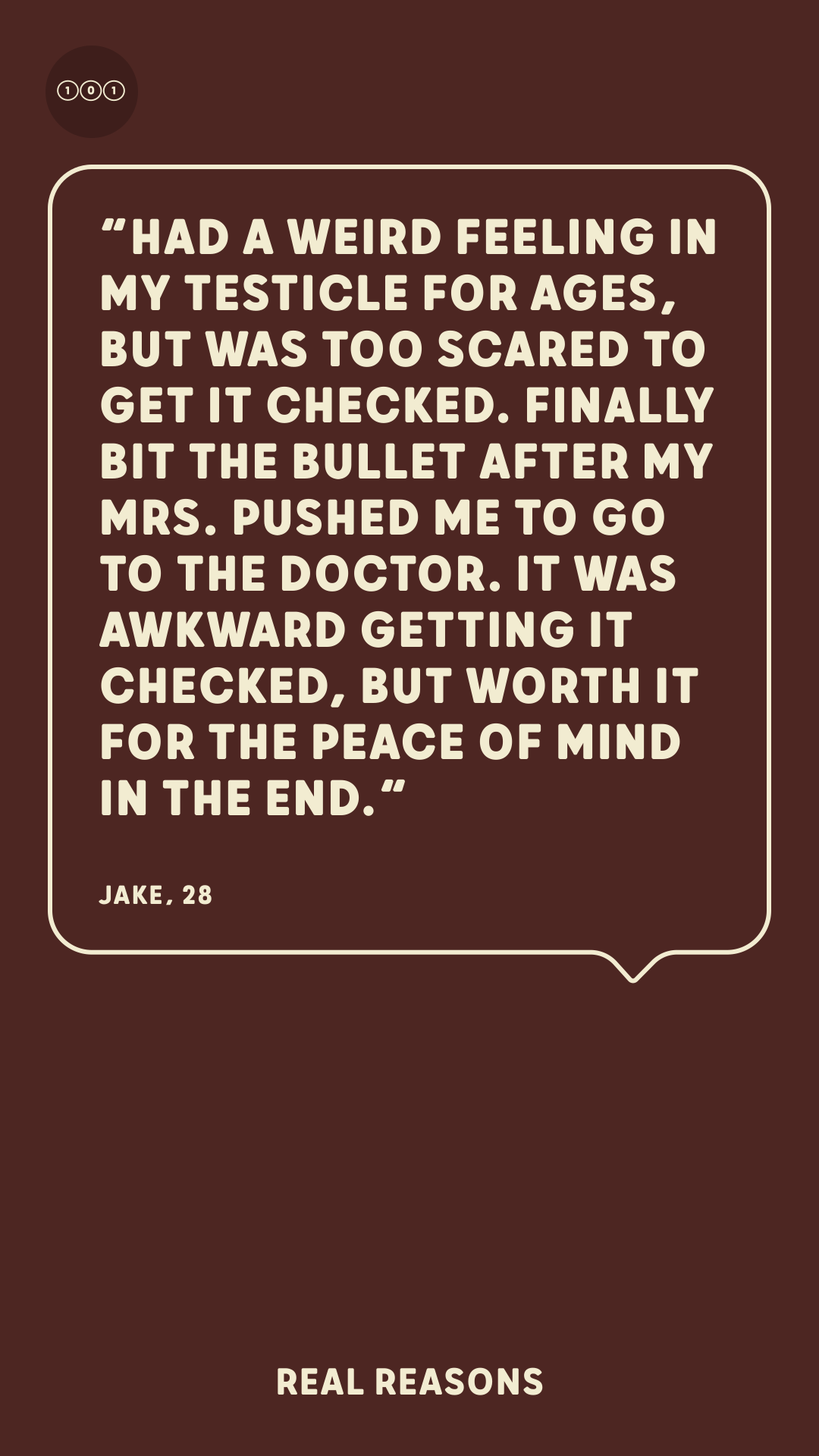
It's looking or feeling different down there.
If something’s looking, feeling or working differently down there, and it’s been on your mind, it’s worth paying attention to. Changes like that can point to a few different things, and a GP can help you figure out what’s going on.
Blood where there shouldn't be blood.
Seeing blood where you weren’t expecting it, especially in semen, can throw you. It’s not always serious, but it’s not something to ignore either. It can be linked to infection, inflammation or something that needs a proper check.
Not sure about that rash, but not game to Google it?
If something’s popped up on your skin and you’re avoiding Googling it because you don’t want to know, that’s usually a sign to get it checked. Rashes, sores or lumps can mean different things, and guessing won’t give you a clear answer.
Erections aren't happening like they used to.
Erections not happening like they used to, or not sticking around, is more common than you think. It can be erectile dysfunction, and it’s often linked to things like stress, blood flow or hormones. There are proper ways to treat it.
Finishing quicker than a pit stop at the F1.
Finishing quicker than you’d like and feeling like you’ve got no control over it can be frustrating. That can be premature ejaculation, and it’s something you can work on with the right support, not just something you have to put up with.
Foreskin's always been tight. Fine... right?
If your foreskin’s always been tight and you’ve just assumed that’s normal, it might not be. Phimosis can cause pain, tearing or hygiene issues, and there are simple treatments that can make a big difference.
Porn feels harder to switch off than it should.
When porn starts to feel harder to switch off than it should be, or it’s affecting your sex life or expectations, that can be a sign of porn addiction. It’s not about judgement, but it is something you can get support for.
A spot or something to tell your hook up about?
Not sure if that spot is just a pimple or something you should be warning partners about? Worth getting clarity instead of guessing. Some STIs don’t look obvious, and getting checked is quick, private and straightforward.
It feels like there's always a drop left.
If you’re needing to push or strain, or it feels like you’re never quite finished, that can point to prostate or urinary issues. It’s common, but not something you just have to live with.
It's been a year of trying for a baby and no luck.
If you’ve been trying for a baby for 12 months with no luck, or 6 months if your partner’s over 35, that’s usually the point to get things checked. It can be infertility, and getting answers early can open up more options.
Want to optimise your fertility ASAP.
A lot of things that affect fertility are actually changeable once you know about them. Things like smoking, alcohol, weight or heat can all play a role, which is why preconception health is about getting on the front foot early.
Your nads are the size of grapes.
If your testicles have always been on the smaller side and you’ve never thought much of it, it can be worth checking. Conditions like Klinefelter syndrome can go unnoticed and can affect hormones, fertility and long-term health.
A healthy bub starts before the two blue lines.
You’re half the equation when it comes to having a baby, and your health plays a bigger role than most people realise. Lifestyle and underlying conditions matter, which is why preconception health check up is so important.
Your health conditions can impact sperm quality.
Things like diabetes, weight, or thyroid issues can quietly affect fertility without obvious signs. It’s not always clear until you look into it, which is why a check-up can help connect the dots.
Infertility is taking an emotional toll.
Going through infertility or IVF can take a toll in ways people don’t always see. It can affect your mood, relationships and how you see yourself, and it’s worth talking to someone if it’s getting heavy.
You've read the fine print on your meds.
Some medications can affect fertility, and it’s not always something that gets explained clearly. If you’re on long-term meds or starting something new, it’s worth asking how it might impact things.
Your history needs a check up before conception.
Past surgery, injuries, or cancer treatment can have an impact later on. It doesn’t always mean there’s a problem, but a check-in before trying for a baby can save a lot of guesswork.
You've talked about kids, but don't know where to start.
You’ve had the conversation about wanting kids, but haven’t actually looked into your side of things. Fertility isn’t just a “later” problem, and getting a check early can give you a clearer starting point.
You’re there anyway.
When you’re already taking the kids to the GP, book yourself in too. You’re there anyway, and it’s one less thing to put off. A quick check now can pick up things early and save a bigger issue later.
Show your kids how it's done.
Kids pick up more than you think. Seeing you take care of your health helps normalise it for them, and shows that it’s just part of looking after yourself.
So they don't have to go alone.
Sometimes it’s easier to focus on everyone else and ignore your own stuff. That can work for a while, but it usually catches up eventually.
Bad hairlines aren't the only thing inherited.
Family history isn’t just about widow's peaks. Things like heart disease, diabetes or some cancers can run in families, and knowing your risk means you can stay on top of it.
Your dad had it. His dad too. You need a test.
If your dad had something and his dad had it too, there’s a fair chance it’s relevant to you. Getting tested or checked early can change how it’s managed.
"Doing anything for your kids" means being around.
You’d do anything for your kids, but that includes looking after yourself long-term. Being around, healthy and present matters more than pushing through and burning out.
Your health is on hold, theirs is the priority.
When your health’s been on the back burner for years because everything else came first, it can catch up with you. A simple check-in can help reset things.
Because you tell your dad to get it checked.
You’re quick to tell your dad or your mates to get something checked, but not always yourself. Taking your own advice is usually a good place to start.
Feeling tension within your relationship.
Healthy relationships don't just happen. If things feel off at home, a GP can point you toward a counsellor — for you, your partner, or both
Runs in the family. So should the skin check
If your dad’s had skin cancer or never bothered getting checked, that history matters. Skin cancer risk can run in families, and regular checks help catch things early while they’re easy to treat.
You've done the maths on what you drink in a week.
You’ve done the maths on what you drink in a week and it’s crept higher than you expected. Drinking at that level can start affecting your sleep, mood and liver, even if you feel “fine”. Worth checking where it’s at.
Your only veg is the lettuce from a Zinger burger.
If most meals are coming from a drive-thru, your body’s missing out on fibre and nutrients. Over time that can impact your weight, cholesterol and gut health in ways that don’t show up straight away.
You've punched a few new holes in the belt.
Gradual weight gain is easy to brush off, especially when it happens slowly. But it can increase your risk of type 2 diabetes, heart disease and low testosterone if it keeps trending up.
Quitting smoking is harder than you thought.
Trying to quit smoking on your own and going in circles is common. Nicotine dependence is strong, and support like medication or coaching can make a real difference to your chances of quitting.
Back into exercise without it breaking yourself.
Wanting to get back into exercise but feeling unsure about your heart isn’t something to guess your way through. A check can rule out underlying cardiovascular issues and give you confidence to start again.
Social vape to can't-start-the-day vape.
What started as a vape on nights out has turned into a daily habit without much thought. Nicotine addiction can build quickly, and vaping still has real impacts on your lungs, heart and even erections.
Stress plan: pending. Has been for years.
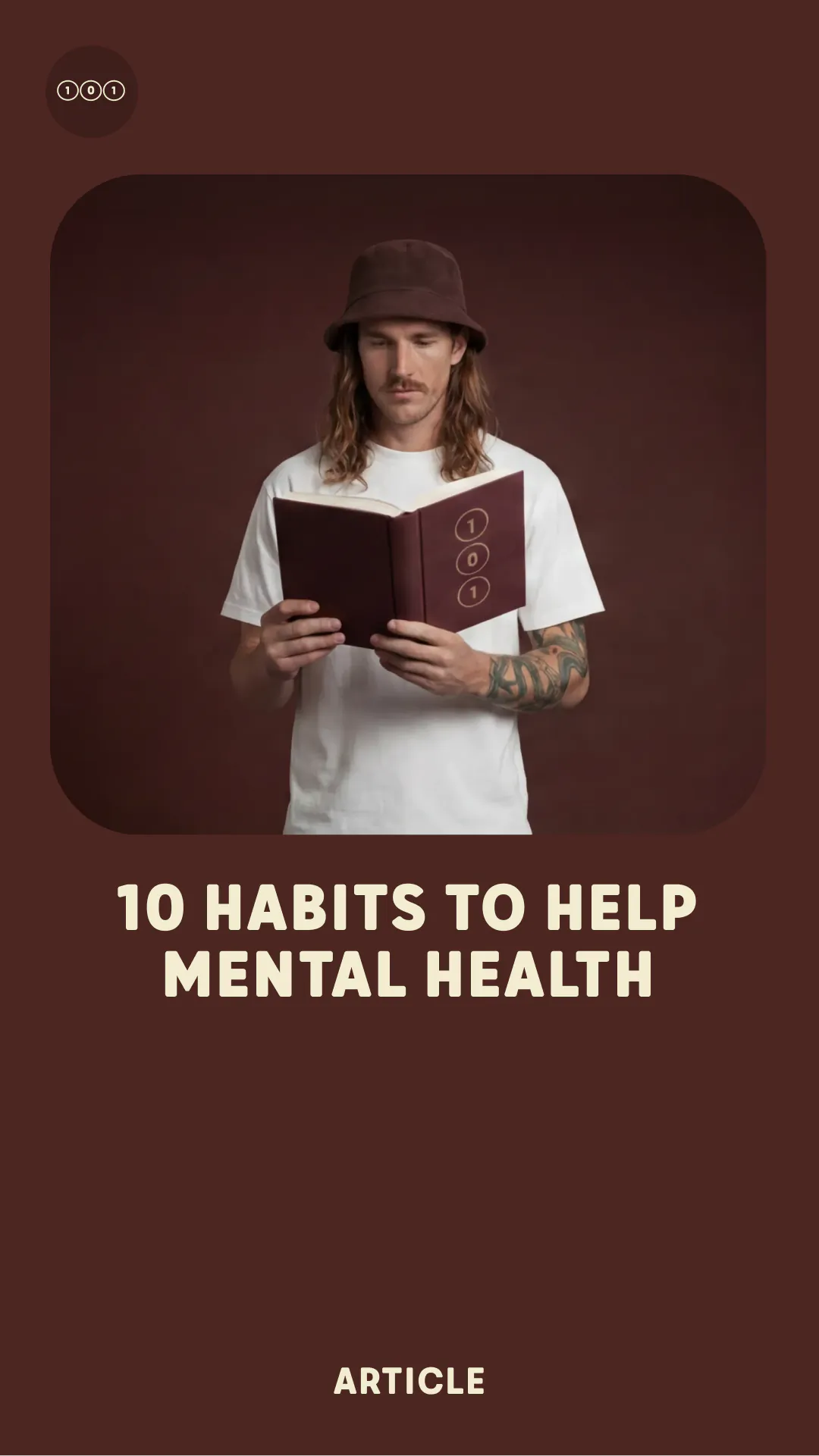
Stress that was meant to be temporary can quietly become your baseline. Over time it can drive anxiety, poor sleep and even physical symptoms like headaches or gut issues.
Snoring like a busted leaf blower.
Snoring like that and waking up exhausted isn’t just bad sleep. It can be sleep apnoea, where your breathing is disrupted overnight and your body never fully rests.
Exhausted all day, wired all night.
Feeling wrecked all day but wired at night usually means your sleep cycle is out of sync. That can be linked to stress, anxiety or poor sleep quality that’s worth addressing.
Stack's growing, bank account's not.
Spending big on supplements without knowing what you actually need can be a waste, and some can affect your liver, hormones or interact with meds. A check can cut through the guesswork.
PIEDs are doing more than you bargained for.
Using performance and image enhancing drugs might help in the short term, but they can affect your fertility, testosterone, liver and heart in ways you won’t see straight away.
Turning to substances that you normally wouldn't.
Turning to substances you wouldn’t normally use can be a sign something’s shifted. What starts as a one-off can quickly become a pattern, affecting your mood, sleep, decision-making, and overall health.
Weekend sport. Week-long recovery.
If a casual game leaves you wiped out for days, your body might be telling you something. Poor recovery, low fitness, or underlying issues can all make activity feel harder than it should.
"Should get fitter" has been on the list a while.
When getting fitter feels overwhelming, it’s easy to do nothing at all. But small, consistent changes matter — staying inactive can gradually impact your strength, stamina, and health.
Your screen time report looks like a 9-5.
If your daily screen time rivals a full workday, you’re likely spending more time sitting than you realise. Too much sedentary time can impact your energy, posture, sleep, and long-term health.
You've got less energy for the things you enjoy.
If you’ve got less energy for the things you actually enjoy, it can be a sign something’s off. Low energy is often linked to sleep, stress, activity levels, and overall health.
Hitting fluid goals. All energy drinks
Energy drinks might feel like they’re keeping you going, but they’re not a substitute for proper hydration or rest. Over time, they can affect your sleep, heart and overall health, and it’s worth checking in on why you’re relying on them.
On the same meds for years without a check-in.
Being on the same medication for years without a review can mean it’s no longer the right fit. Side effects, dosage or interactions can change over time.
Managing a chronic condition? Get a plan for that.
Managing a long-term condition without a clear plan can get messy. A GP chronic condition management plan can help coordinate care, track progress and access support like allied health.
Taught to push through. Body's pushing back.
If you’ve grown up around the idea that men just push through, it can make it harder to act early. But ignoring symptoms often means they’re more serious by the time you deal with them.
PrEP, PEP, testing. Know where to go?
Finding a GP who's genuinely inclusive makes all of it easier. Staying on top of your sexual health protects you and the people you're with.
That cholesterol result you never followed up.
That “bit high” cholesterol result from a few years ago doesn’t fix itself. Left unchecked, it can increase your risk of heart disease or stroke over time.
On the tools and never had a chest check?
Long-term exposure to dust, fumes or fibres can affect your lungs without obvious symptoms early on. Regular checks can help pick up occupational lung disease early.
Shoulder injury from footy that never got sorted?
Old sports injuries that were never properly treated can lead to ongoing pain, reduced mobility and even arthritis later on.
Back's gone and your fix is a closer park?
Living with back pain and just working around it is common, but it can be linked to underlying issues that are easier to manage with the right treatment.
Can't change the genes. Can change the odds.
You can’t always control whether you develop a condition, but getting on top of things early can change how they progress and how much they impact your life.
Reckon you've got "low T"? One way to find out.
If something feels off hormonally, like low energy, mood changes or libido, it’s worth checking properly. Testosterone issues need a proper diagnosis by a doctor.
You've been saying you're "run down" since February.
Feeling “run down” for months isn’t just a busy patch. Ongoing fatigue can be linked to things like sleep issues, stress, low iron or other underlying conditions worth checking properly.
A cough that's hanging around like a bad smell.
A cough that sticks around can be linked to asthma, infection or something more serious. If it’s not clearing, it’s worth getting it looked at.
Heart's racing when you’re sitting down.
A racing heart at rest can be linked to anxiety, rhythm issues or other heart conditions. It’s not something to just ignore.
Always bloated, but blaming “something you ate”.
Ongoing bloating isn’t always just something you ate. It can point to gut issues like IBS, food intolerances or other digestive conditions.
Topping out the TV volume.
Turning things up louder than you used to can be early hearing loss. Catching it early makes it easier to manage and protect what’s left.
Really gotta dash to take a slash.
Changes in how often you need to go, or urgency, can be linked to prostate or urinary tract issues. It’s worth getting checked rather than managing around it.
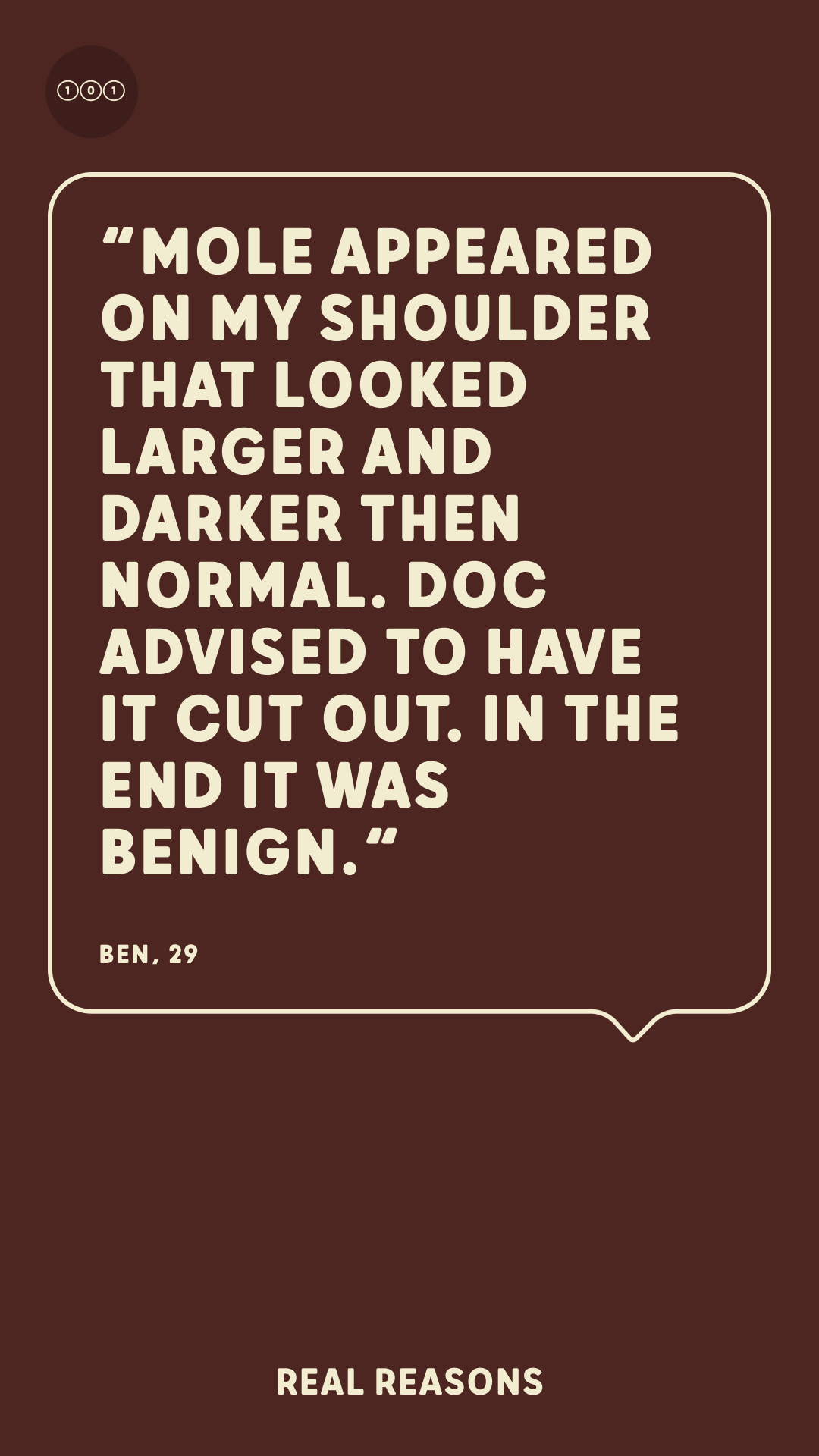
New mole or an old one looking different?
A new mole or changes to an existing one can be an early sign of skin cancer. These are one of the easier things to treat if caught early.
You've read the whole back of the shampoo bottle.
Spending longer in the bathroom or noticing changes in bowel habits can be linked to gut issues, including bowel cancer. Worth checking early.
Blurry vision you've put down to screentime.
Blurry vision you’ve been putting down to screens can be more than just eye strain. It can be linked to vision changes, eye conditions or even things like diabetes, and it’s worth getting a proper check instead of guessing.
Your pants are feeling looser without good reason.
Losing weight without trying might sound like a win, but it can point to something going on under the surface. Things like thyroid issues, gut problems or other conditions can show up this way.
Your pee's trying to tell you something.
Urine that’s darker than it should be isn’t always just dehydration, especially if it keeps happening. It can be linked to how your liver or kidneys are working, and it’s worth getting checked.
Stiff every morning (not in the way you'd prefer).
Waking up stiff most mornings and needing time to loosen up can be more than just getting older. It can be linked to inflammation, arthritis or joint issues that are easier to manage early.
You’re over the debilitating headache.
Headaches that keep coming back usually have something behind them. It could be stress, poor sleep, dehydration or vision problems, but if they’re sticking around, it’s worth figuring out why.
Skin that's dry, irritated or breaking out?
Persistent skin issues can signal more than a bad routine — allergies, hormones or underlying conditions could be involved. A GP can get to the cause and sort out a treatment that actually works.
Hair loss bothering you more than you let on?
Hair loss isn't just cosmetic — it can signal hormonal or health issues worth knowing about. Either way, early advice means more options.
Haven't seen one in years.
If it’s been years since you’ve seen a GP, you don’t really have a baseline for what’s normal for you. That makes it harder to pick up on changes or catch things early.
No symptoms doesn't mean no STI.
Changing sexual partners is a good time to get tested, even if you feel completely fine. A lot of STIs don’t show symptoms, so testing is the only way to know where you stand.
Another birthday? You might be due for screening.
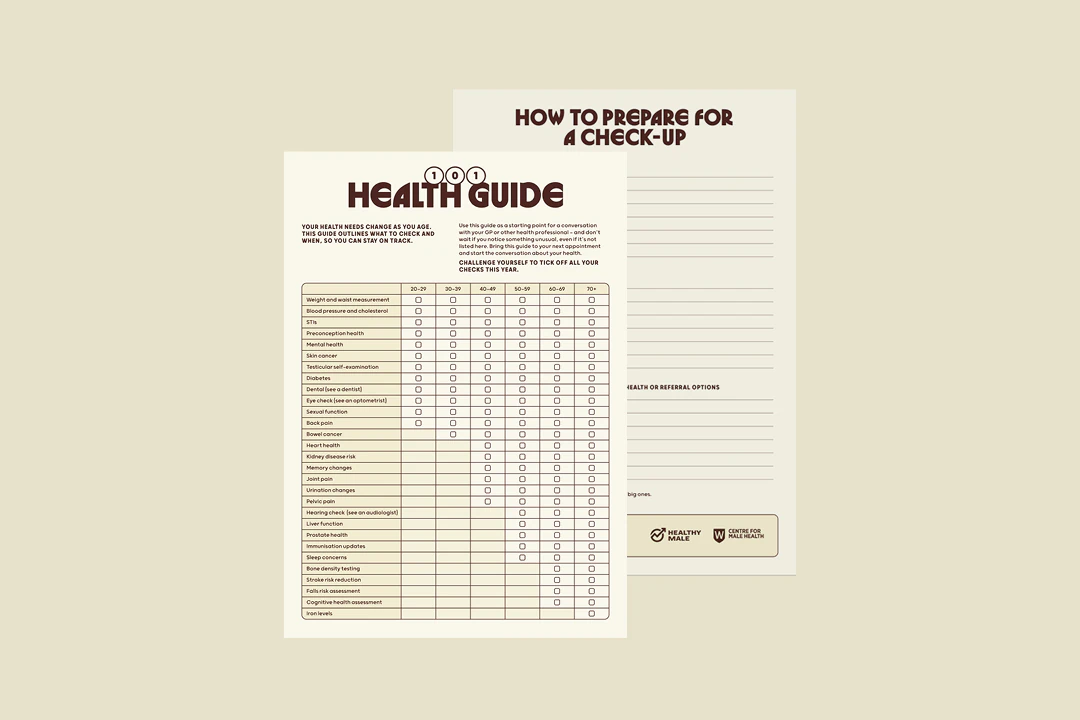
As you get older, you become eligible for screenings for bowel cancer, diabetes and heart health. They’re designed to pick things up early, often before you’d notice anything yourself.
Blood pressure? No idea.
Not knowing your blood pressure means missing one of the simplest early warning signs for heart disease. It’s quick to check and can flag issues before they become serious.
Your barber knows more about you than your doctor.
Having a regular GP means someone knows your history and what’s normal for you. That makes it easier to spot when something’s changed and act on it early.
Your car gets more check-ups than you.
Staying on top of your health works a lot like servicing your car. Regular check-ins help pick up small issues before they turn into bigger, more expensive problems.
Waiting room now beats a waitlist later.
A short wait now can save you from a much longer one later if something gets worse. Early checks usually mean simpler treatment and fewer complications.
Feeling fine and want to keep it that way.
Feeling fine doesn’t always mean there’s nothing going on. A lot of conditions build quietly, which is why it’s worth checking in even when nothing feels wrong.
Young enough to get ahead of it.
You're young, not invincible. Now's the time to build the habit and find a GP who actually knows you — not one meeting you for the first time in a crisis.
The drive's frustrating. The alternative is worse.
Distance to a GP can be a barrier, but putting things off usually means dealing with something more serious down the track. Earlier care is almost always easier to manage.
Work or train outdoors? Get your skin checked.
Sun's hard to avoid when it's part of your job or your life. Even without burning, changes can build up quietly. A quick check with a GP can catch anything worth catching early.
Got a weight goal? Get a plan behind it.
Whether you're trying to drop weight or build it, doing it without guidance can do more harm than good. A GP can help you set a realistic goal and make sure what you're doing is actually working for your body
Holiday's booked but vaccinations aren't
Travel comes with different health risks depending on where you’re going. A quick check before you leave can cover off vaccines, meds and anything else that might derail the trip.
You made it to 101. So should you
Whatever brought you here — curiosity, a nudge from someone who cares, or something you've been quietly sitting with — you showed up. That's the hard part. Now book the appointment.
Help a bro out and share your GP story


Real Reasons
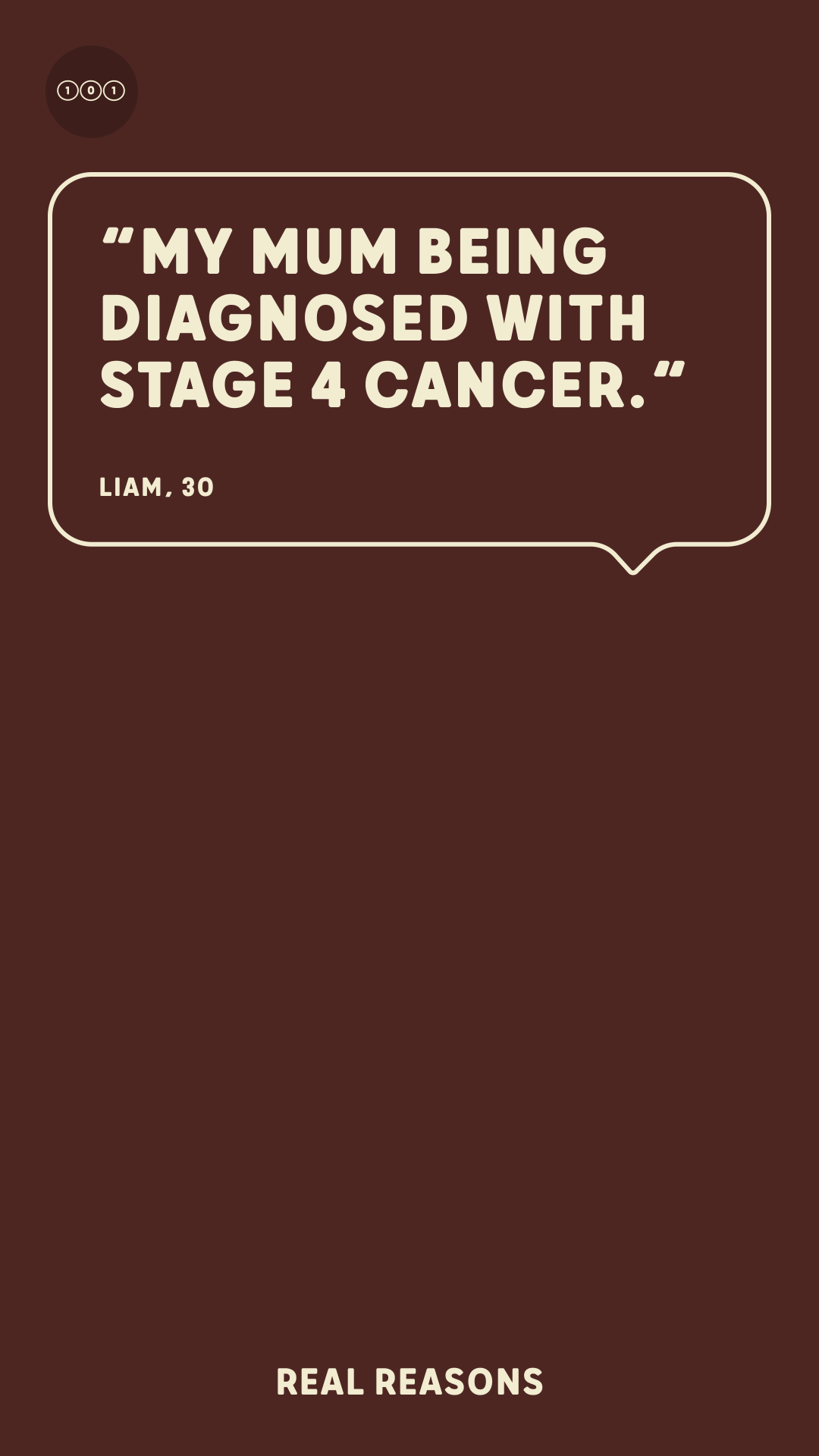
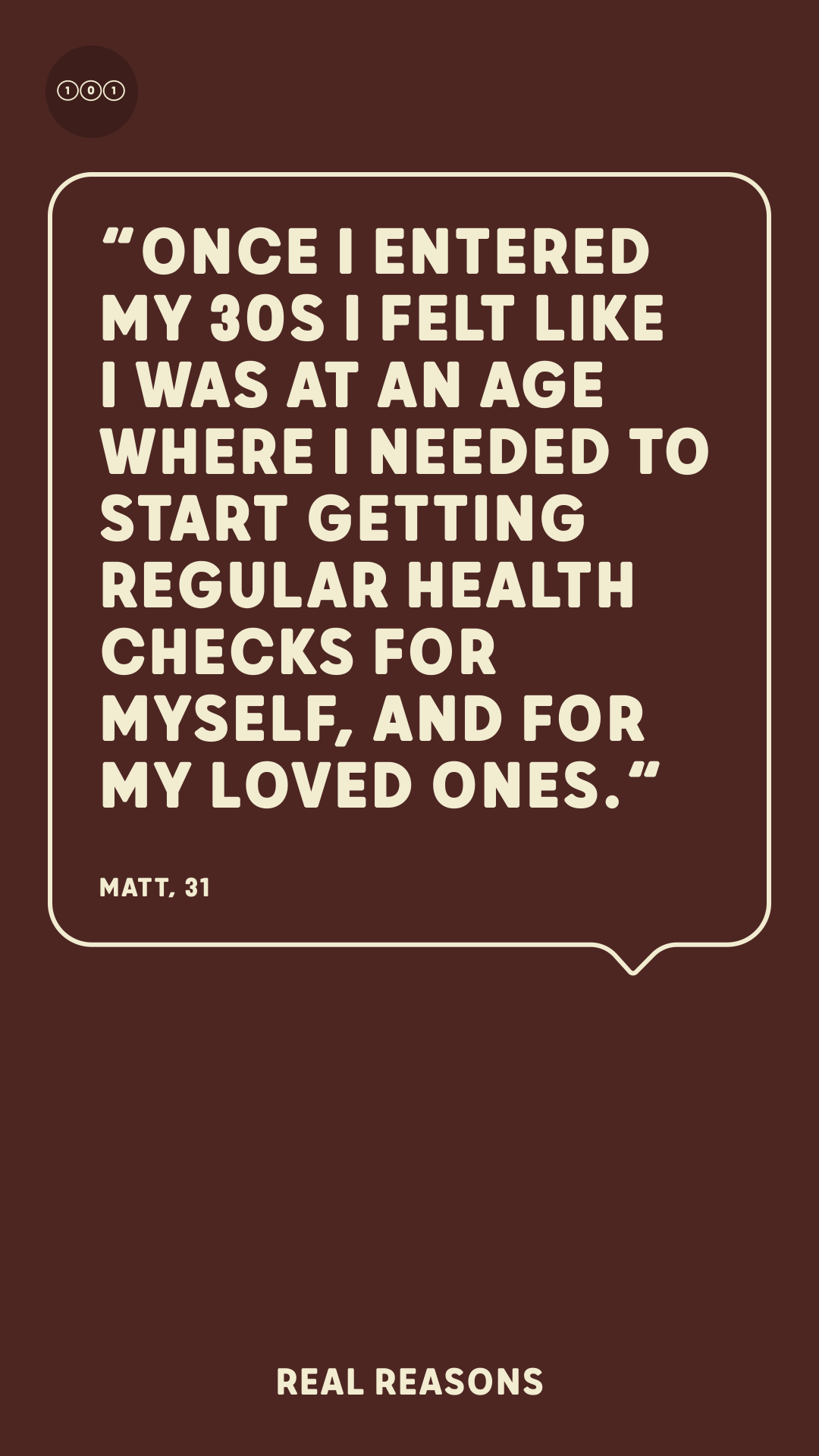
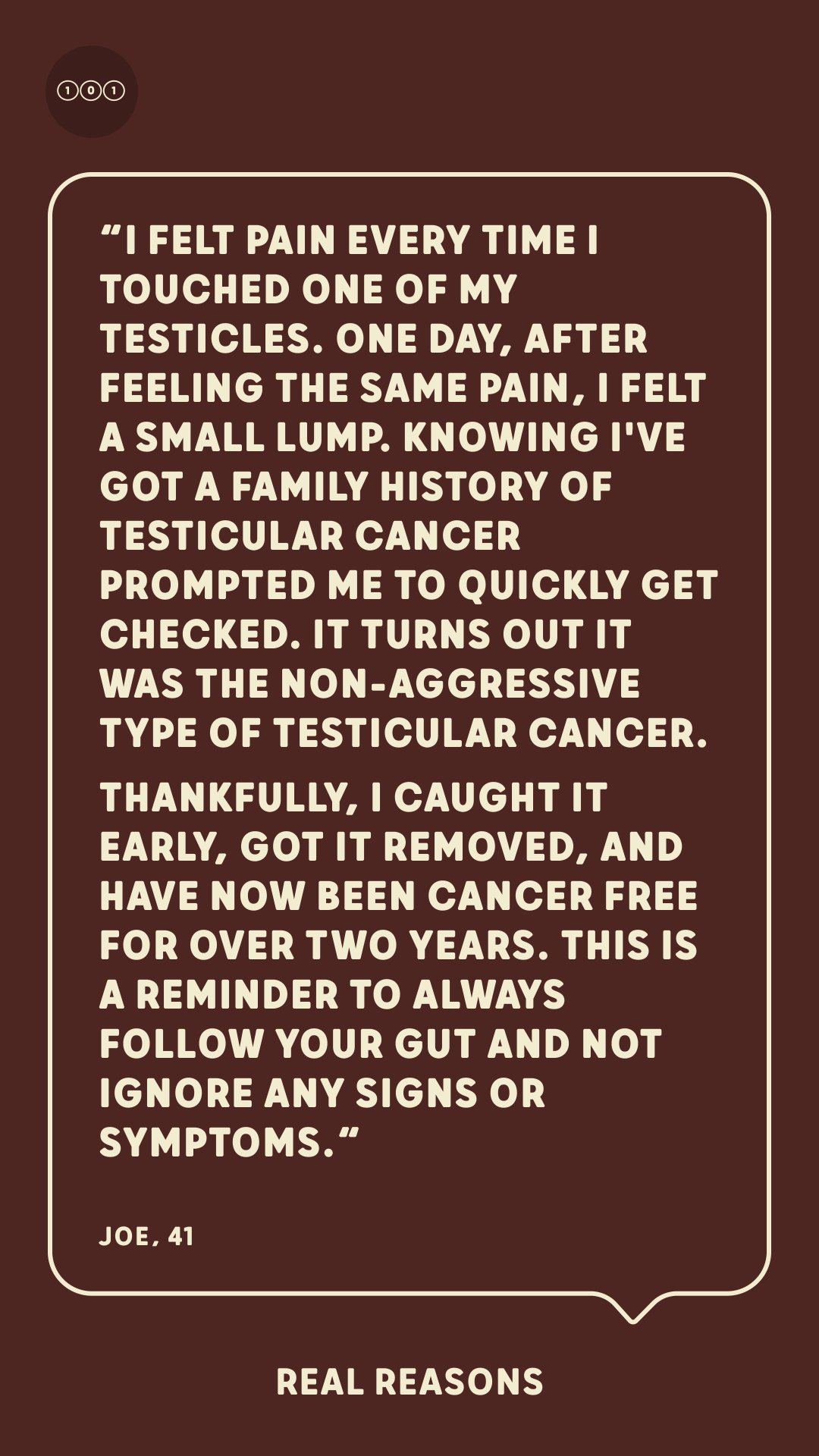
Yeah, Nah
You reckon you know the numbers on men's health? Have a crack.
2 in 3 Australian men don’t see a GP straight away when something’s wrong.
Men account for around 3 in 4 suicides in Australia.
Mental health is a valid reason to see a GP.
GPs can help with more than just physical health.
You need a referral or a big problem to see a GP.
You should only see a GP when something’s seriously wrong.
A cough that won’t go away isn’t worth checking.
Feeling run down for weeks is just part of being busy.
Snoring is harmless.
Blood in your stool can wait.
Changes in your skin or moles can be ignored.
Ongoing chest discomfort is probably just stress.
You can see a GP about sex or performance.
Booking a GP “just to check” is a waste of time.
5/14
Bit shaky, mate. Might be time to know the numbers a bit better.
10/14
Solid effort. A couple of those still got you.
14/14
You know your stuff. Better than most, actually.
Follow Up
When did you last visit to
the GP?


a row


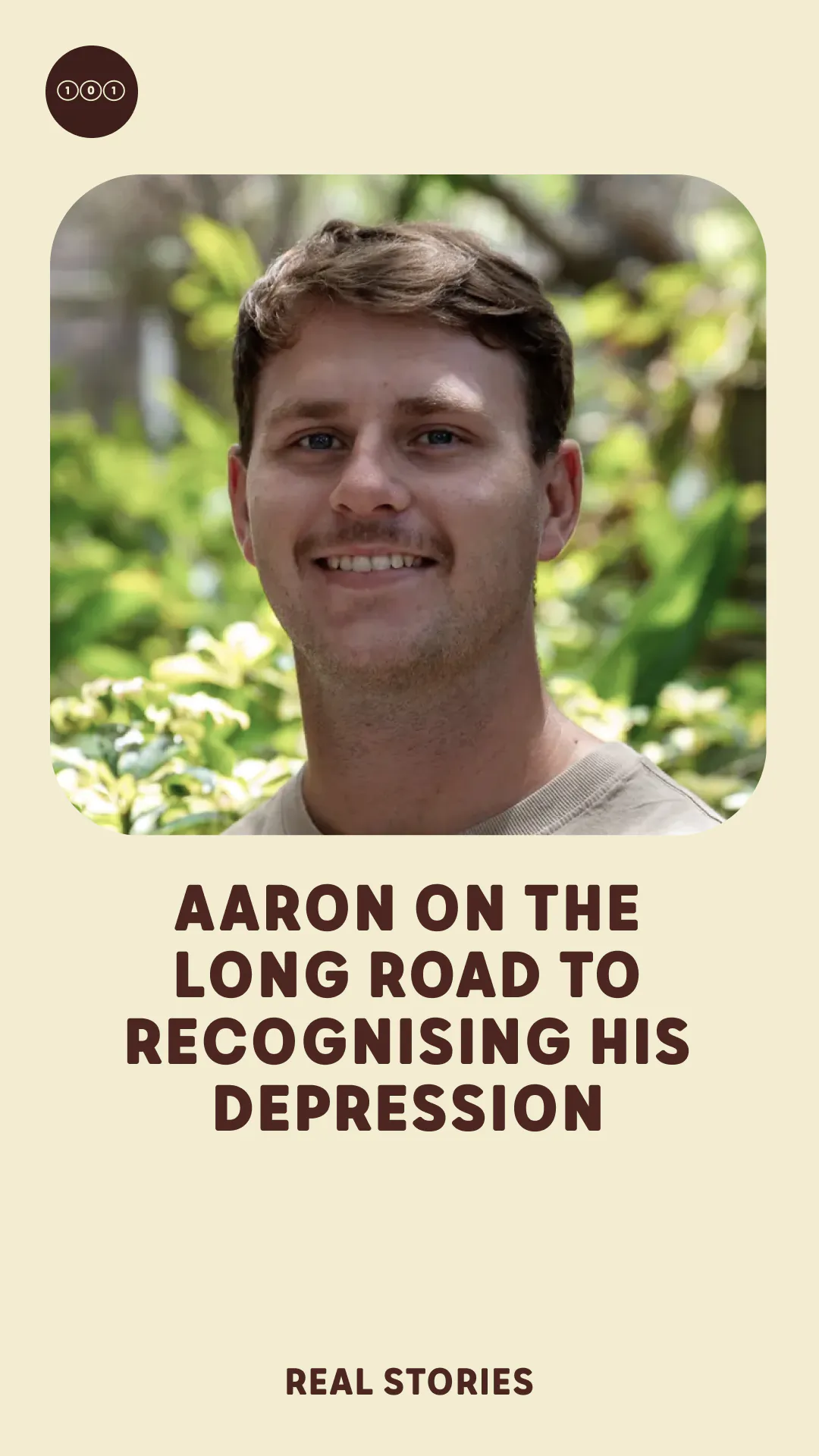
Real Stories



Downloads
Helpful Links






Health Articles



Partners